
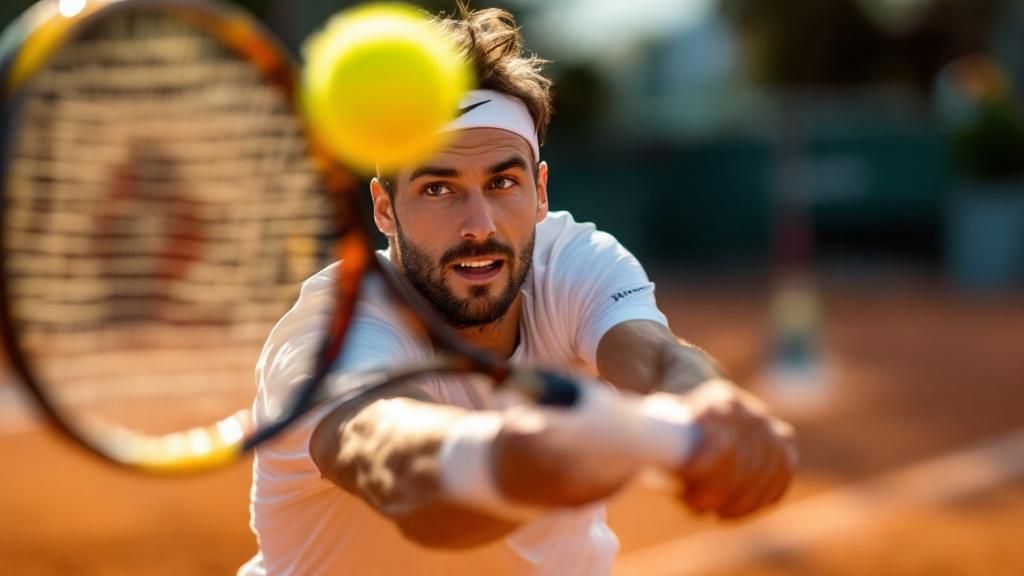
Britain’s Jack Draper has pulled out of the upcoming Monte Carlo Masters as he continues his measured comeback from an arm injury. The 24-year-old, who has taken part in three tournaments since returning to competitive action in late February after a six-month absence, has decided to skip the prestigious event, which begins on 5 April. Despite showing promising form with a victory in Dubai and an impressive victory over Novak Djokovic at Indian Wells, Draper believes continuing his rehabilitation in London is the wiser course of action. The decision reflects his cautious approach to recovery, with eight months of the season still ahead. Draper has joined fellow withdrawals Djokovic and American top-10 player Taylor Fritz in opting out of the competition.
Tactical Pullback Marks Cautious Recovery Route
Draper’s decision to skip Monte Carlo represents a continuation of the measured strategy he and his coaching staff have adopted since his serving arm injury initially surfaced during the previous clay-court swing. Rather than risk aggravating the injured area by participating in the demanding European clay season, the British competitor has chosen to prioritise long-term fitness over short-term tournament appearances. This approach has previously informed numerous key decisions, including his withdrawal in the American Open before his second-round encounter and his decision to miss the Australian tournament at the start of this year. The approach reflects a valuable insight from his problematic injury record.
With roughly eight months of the season left, Draper clearly feels no urgency to play at Monte Carlo despite his lately impressive results. His practice programme in London will allow him to build his conditioning gradually and sharpen his playing style away from the demands of tour-level competition. The timing of his comeback to grass-court play at Queen’s and Wimbledon, where he will prove to be a major home attraction, seems to be the target milestone for complete preparation. This measured strategy, whilst potentially frustrating in the short term, demonstrates maturity and self-awareness about the rigours of professional tennis at the highest level.
- Draper preparation in London to build fitness gradually
- Serving arm injury remains main worry for squad
- Grass-court season at Queen’s Club and Wimbledon approaches
- No cause for concern about withdrawal decision
Impressive Early Returns Despite Challenges
Despite his measured approach, Draper has already shown that his comeback is developing well. Since coming back to competition on 23 February, the 24-year-old has competed in three ATP Tour events across five weeks, highlighting his quality and resilience. His performance at Indian Wells proved particularly noteworthy, where he recorded a significant triumph over Novak Djokovic, the 24-time major champion, on his way to reaching the quarter-finals. These results demonstrate that his physical condition is advancing consistently, and his match sharpness remains sharp despite the lengthy time away.
His first outing in Dubai established the pattern for his return, with Draper claiming a tournament victory that provided both confidence and momentum heading into the North American hard-court swing. However, his subsequent loss to Reilly Opelka at the Miami Open acted as a timely reminder of the work still required. Nevertheless, Draper’s own evaluation that he is “feeling good” physically holds significance given the standard of opponents he has encountered and the quality of tennis he has produced in recent weeks.
Dubai Breakthrough and Indian Wells Glory
Draper’s choice to begin his return in Dubai proved inspired, with the British competitor securing success in his first event back following half a year away from competitive tennis. The triumph offered an ideal platform for confidence and showed that his serve had adequately recovered to withstand the rigours of tour-level play. This success raised anticipation for the following hard-court Masters tournaments in North America.
His display at Indian Wells elevated his comeback narrative to fresh heights. Defeating Djokovic, a player boasting unrivalled credentials and success on the professional tour, was a notable achievement and suggested Draper’s performance was truly returning to the benchmark required of a former US Open semi-finalist. The quarter-final run underscored his competitive pedigree despite the lengthy absence.
The Upper Limb Injury Challenge and Extended Strategy
Draper’s decision to skip Monte Carlo reflects a extension of the careful strategy his team has adopted towards his left arm injury, which originally triggered concerns during last year’s clay-court swing. Rather than attempting to push through pain as he originally attempted, the British star and his support team have learned from past mistakes. The injured bone in his dominant arm remains a concern that requires careful handling, notably because of his track record of injuries throughout his time as a player. This measured stance shows understanding in recognising that quick wins are too costly for long-term prospects.
With roughly eight months of the season still remaining, Draper recognises that competing at Monte Carlo, one of the ATP Tour’s most prestigious events, would represent an unnecessary risk at this pivotal point of his rehabilitation. Instead, he has opted to remain in London, continuing his training regimen and developing his physical conditioning away from the demands of tour play. This choice underscores his commitment to achieving full fitness rather than simply getting back to action. The upcoming grass-court season, culminating at Wimbledon, provides a more suitable target for his full competitive return.
- Arm injury initially triggered pain throughout the 2025 clay-court swing
- Had withdrawn from the US Open and shortened 2025 season
- Skipped the Australian Open this year as a precaution
What Lies Ahead for British Tennis
Draper’s exit from Monte Carlo occurs during a period when British tennis is experiencing a period of transition. His drop to 25th in the world rankings and loss of British number one by Cameron Norrie highlights the impact of his lengthy spell out from competitive play. However, the 24-year-old’s measured approach to his comeback indicates he remains confident in his capacity to regain his former status when fully fit. The patience being demonstrated now may prove instrumental in establishing a more consistent career path in the future, notably given the physical demands of top-level tennis at the elite level.
The broader context of Draper’s position also emphasises the critical nature of handling injuries wisely within the contemporary sport. His willingness to take unpopular decisions—missing prestigious tournaments like Monte Carlo—showcases a level of maturity that often eludes younger players eager to establish themselves. With the grass season drawing near, Draper has established himself as a serious contender on home turf, where his playing style has historically thrived. Strong performances at Queen’s and Wimbledon could rapidly revive his ranking and reputation, vindicating the conservative approach his team has implemented throughout this comeback period.
Grass Court Campaign Approaches
The shift to clay to grass represents a natural chance for Draper to boost his return to competition. Having bypassed the demanding European clay-court swing, he will arrive at Queen’s and Wimbledon with renewed energy and a well-prepared serving arm. These events, especially Wimbledon, hold special significance for British players, and Draper is anticipated as among the home crowd’s star attractions. A strong showing on grass could deliver the impetus needed to justify the cautious choices made during this comeback period.
